How Bags Are Manufactured in India: A Step-by-Step Process
Bag manufacturing in India follows a systematic, industrial process that balances rigorous material selection, skilled workmanship, and multi-stage quality control. Understanding this workflow helps bulk buyers make informed sourcing decisions and set realistic expectations for production timelines.
If you are currently evaluating suppliers, start by learning how to choose a reliable bag manufacturer for bulk orders.
1. Design Finalization & Sampling
The manufacturing journey begins with a blueprint. Before a single piece of fabric is cut, the design must be technically validated.
The Prototyping Phase:
- Ergonomics: Determining bag dimensions, weight distribution, and compartment layout.
- Material Selection: Choosing the right combination of outer fabric and inner lining.
- Branding: Mocking up logo placement and size.
Custom design workflows are explained in detail in our guide on custom bag manufacturing.
2. Material Cutting & Preparation
Once the sample is approved, bulk production begins with the cutting floor. This is a precision-critical stage where fabrics are layered and cut according to standardized patterns to ensure every bag is identical.
Key Activities:
- Pattern Marking: Stencils are laid out to minimize fabric wastage.
- Layer Cutting: Heavy-duty electric cutters slice through multiple layers of fabric (Polyester, Canvas, or PU) simultaneously.
You can explore commonly used fabrics in our materials catalog.
3. Stitching & Assembly
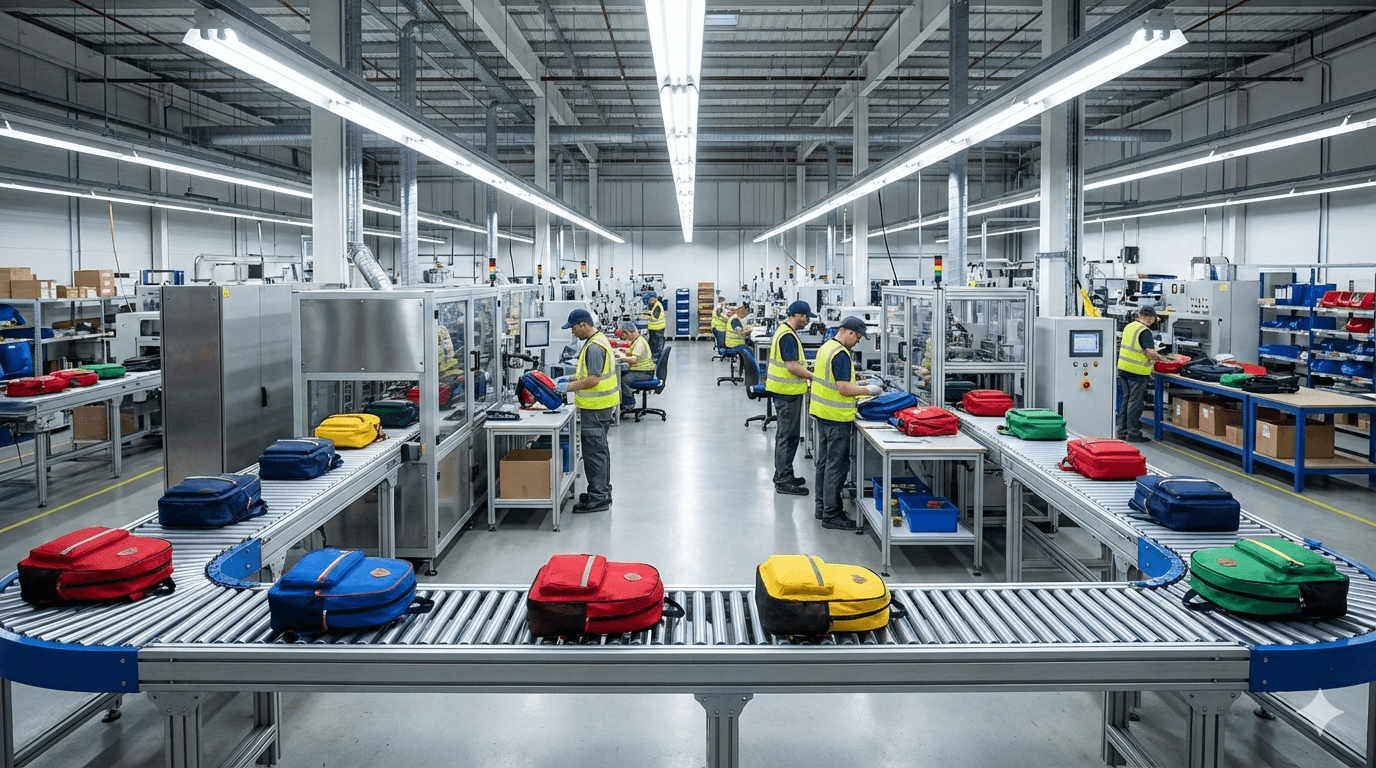
This is the heart of the manufacturing process. Skilled operators assemble the bag using industrial stitching machines. It is not a linear process; different parts (front pockets, back straps, main body) are often stitched in parallel before final assembly.

Assembly Steps:
- Sub-Assembly: Zippers are attached to pockets; linings are stitched to outer shells.
- Main Assembly: The structural body of the bag is sewn together.
- Reinforcement: Bar-tacking machines apply extra stitches to stress points like strap joints to prevent tearing.
4. Quality Control & Inspection
Quality checks are not left for the end; they are performed at multiple stages (inline inspection) to catch defects early.
Inspection Criteria:
- Visual Check: Ensuring straight stitch lines and no loose threads.
- Functional Check: Testing zippers, buckles, and weight capacity.
- Finishing: Trimming excess thread and cleaning the fabric.
This approach is also highlighted in our case study on crafting durable banking bags in Odisha.
5. Packaging & Dispatch
The final step involves compressing and packing the finished bags securely to prevent moisture or transit damage, preparing them for logistics dispatch across India.
Understanding this process helps buyers assess supplier reliability and production capability.
12/16/2025 • TDS Synthesis